



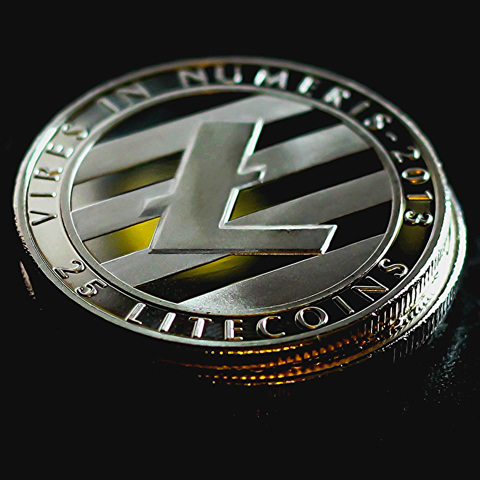
Image by Eivind Pedersen from Pixabay
In our increasingly digitized world, consumers desire a money that can move as freely as information. We love how we can upload a photo in real-time or send an email across international borders without much thought. Likewise, we also like to buy things in stores and online without having to think too much about technical complexities.
With cryptocurrency, we can now move money without going through a bank and we can even enjoy super-low remittance fees when we need to send money to another country. With the technology and infrastructure already in place, it is a wonder why modern consumers are not rushing to adopt a “borderless” money that is safe to be transmitted anywhere in the world without any worries of frictions. As data privacy is very important, a legal and private currency should also be highly desirable and Litecoin can be that ideal choice.
In this visionary blog article, we will take an insightful look into how Litecoin can serve a practical purpose in our modern world i.e. used as digital cash. We will talk about the core advantages of Litecoin and how it can function alongside Bitcoin as a safe and efficient digital cash.

Litecoin For Speedy Transactions
Litecoin, as its name implies, is designed to be a “lite” version of Bitcoin and it was created by Charlie Lee, a former Google engineer in 2011. Unlike Bitcoin, Litecoin was not designed to be a store of value but is born for a specific mission, that is to serve as a practical medium of exchange. After more than a decade, the tools, technology, and market conditions are finally converging to make that vision a reality.
Now imagine a typical action that you do everyday. You walk into a shop, choose your item, tap your phone or card at the cashier counter, then walk out with your item. That’s the expectation of modern payments. People love digital conveniences, which in this case means they do not need to fumble around in their wallets for cash, and then making sure they are given the correct amount of change by the cashier. This love of convenience is just one of the factors that had increasingly more and more consumers using bank cards and digital wallets. However, some consumers are still apprehensive of using digital money because they do not fancy having their monetary transactions monitored by the government or banks. This is where Litecoin can be particularly useful with its MWEB privacy feature.
In addition, Litecoin comes with an average transaction confirmation time of just 2.5 minutes, which is four times faster than Bitcoin’s 10-minute intervals. This fast confirmation time does not matter from the perspective of the consumer but it is an attractive feature for the merchants on the receiving end. A fast confirmation time makes Litecoin suitable for real-world retail use. For instance in e-commerce, Litecoin’s fast speed removes the waiting-room anxiety that has plagued merchant payments for years. Merchants get faster settlement confidence and customers get the frictionless experience they demand. With crypto payments, merchants also do not have to worry about chargebacks that further erode into their revenue in addition to the myriad of fees charged by banks.
MWEB: Privacy That Protects Real People
One underappreciated barrier to cryptocurrency adoption in everyday commerce is privacy. You must understand that on fully transparent blockchains, every transaction is a public record. If you decide to receive or send crypto money, information like your salary, your medical expenses, your political donations, etc are all potentially visible to anyone with a blockchain explorer.
Litecoin addressed this directly with the launch of MimbleWimble Extension Blocks (MWEB) in 2022. MWEB is an optional, opt-in privacy layer built directly into the Litecoin protocol. It uses confidential transactions to obscure transaction amounts and employs CoinJoin-like mechanisms to obscure sender and recipient details. This task can be all achieved without requiring trust in a third party (typically a bank) or compromising the security of Litecoin’s base layer’s integrity.
For everyday consumers, MWEB means you can buy personal items without leaving a permanent and public financial trail. For businesses, it means confidential supplier payments that don’t reveal strategic purchasing data to competitors. MWEB brings Litecoin’s privacy properties closer to physical cash which after all, is what digital cash should look and feel like – a perfect replacement for cash.
In fact, Litecoin is better than physical cash as its high cryptographic security pretty much ensures no one can hack or steal money from the system. In addition, the Litecoin network thus far has not suffered any downtime, which cannot be said for conventional banking systems. Even the systems of some of the most established banks have been known to suffer downtime occassionally.
Super Low Transaction Fees
As far back as we can remember, transaction fees on legacy payment rails, mainly credit cards, wire transfers and cross-border remittances dig into the pockets of merchants and consumers alike. You pay for these fees directly or indirectly even if you do not notice them.
A 2-3% credit card processing fee is simply a tax on commerce that merchants are forced to accept due to the monopolistic powers of the banks. You as a consumer might think that it is an insignificant fee but much of what the merchants have to bear from commission fees, taxes, price inflations, etc are all inadvertently passed down to the consumers.
Cryptocurrencies like Litecoin challenges these long standing practices aggressively. The average Litecoin transaction fee hovers at a fraction of a cent, consistently among the lowest of any truly battle-tested blockchain network. For microtransactions like tipping, subscription contents or everyday purchases, this matters enormously.
If a merchant accepts Litecoin for a $8 cup of coffee, he does not need to surrender $0.25 to a payment processor (typically the bank). Once Litecoin reaches mass adoption scale with millions of transactions, the economics will be transformative. For merchants in developing economies operating on thin margins, this could be very liberating indeed as it frees up monetary resources for more important matters that could bring more value to the customers.
Market Forces That Would Drive Mass Adoption of Litecoin
Technology alone will not create adoption. For Litecoin to achieve mass adoption as a global digital currency, a specific constellation of market forces must come together:
Merchant Integration
This factor is the first domino that must be toppled in order to trigger a long chain of mass adoption worldwide. When consumers know they can spend Litecoin at thousands of online and physical stores seamlessly, the utility case becomes undeniable. Payment processors like BitPay, NOWPayments, and integrated PoS terminals can make accepting Litecoin a breeze but crypto in general is still rather unpopular with the average consumer at this point of time. Expansion of these integrations, particularly into e-commerce platforms like Shopify, WooCommerce and Amazon will be essential to boost the usage of Litecoin as a form of currency. In Malaysia, Lazada and Shopee are tremendously popular e-shopping platforms that attract thousands of visitors daily. If crypto payment is integrated into these platforms, the crypto market will surely gain more visibility in the South-East Asia region.
Regulatory Clarity
Regulatory uncertainties around the crypto market is one of the main factors that is hindering the crypto market from expanding. For crypto to become a mainstream currency, governments and financial regulators worldwide need to establish clear, workable frameworks for crypto payments. Countries that can provide clear tax guidance on small crypto transactions will remove the compliance friction that currently discourages casual spending of cryptocurrencies. From the perspective of the government, encouraging the people to use selective cryptocurrencies that are regulated enables better monitoring of consumer spending habits, which would help in creating more effective regulations and policies to boost the retail economy.
Easy to Use Crypto Wallets
The average consumer will not tolerate complicated seed phrases, gas fee complexities or extensive wallet setup steps. In order for Litecoin to be as easy to use as possible, it will need to be compatible with wallets that feel as simple as Apple Pay — one tap, done. Many popular crypto wallets are becoming more intuitive to start using without the need for tutorials but at this moment, digital wallets that carry fiat money dominate the market.
Stablecoin Competition
The rise of stablecoins as a competition with Litecoin must also be acknowledged. While algorithmic, gold backed and US dollar backed stablecoins address the volatility concern, they introduce counterparty risk. Litecoin’s value propositions, mainly its decentralized nature, censorship-resistant, low-fee, fast, and private differentiates it significantly for users who want real digital cash, not a tokenized IOU.
Brand Awareness: The Marketing Frontier
Here is where the Litecoin community faces its most honest challenge. Although Litecoin’s technical fundamentals are strong and it is ready for mass adoption, its brand presence however has been inconsistent and frankly, quite dull.
The Litecoin Foundation and its community must pursue a deliberate, well-funded marketing strategy that communicates a single, clear value proposition to the average non-technical consumers. For example, Litecoin should be promoted as a fast, safe, cheapest and most private way to pay for anything, anywhere.
This means investing in mainstream media campaigns and not just crypto publications that only a small segment of consumers read. It means sponsorships that reach everyday people such as sports events, music festivals, e-sports tournaments, and retail partnerships. The Litecoin Foundation’s past sponsorship of the UFC and Miami Dolphins were steps in the right direction. It’s proof that bold, visible placements create cultural recognition.
Educational content that demystifies MWEB, explains fee comparisons in plain language, and shows real checkout flows on camera will convert curious viewers into active users. Partnerships with personal finance influencers, travel bloggers and small business advocates can reach demographics that knows nothing about blockchains but need a better way to make payments.
Conclusion: The Road Ahead
Unlike some other cryptocurrencies, Litecoin is not chasing speculation. It is actively building the crucial foundation blocks for a world where anyone, anywhere, can send and receive value as easily as sending an email. With Litecoin, your monetary transactions can be private, safe and completed with nearly zero cost.
The technology is ready and the infrastructure is rapidly maturing. What remains is the collective will of the community, the industry and the market to align and push forward together.
- Tags:
- bitcoin, blockchain, cryptocurrency


